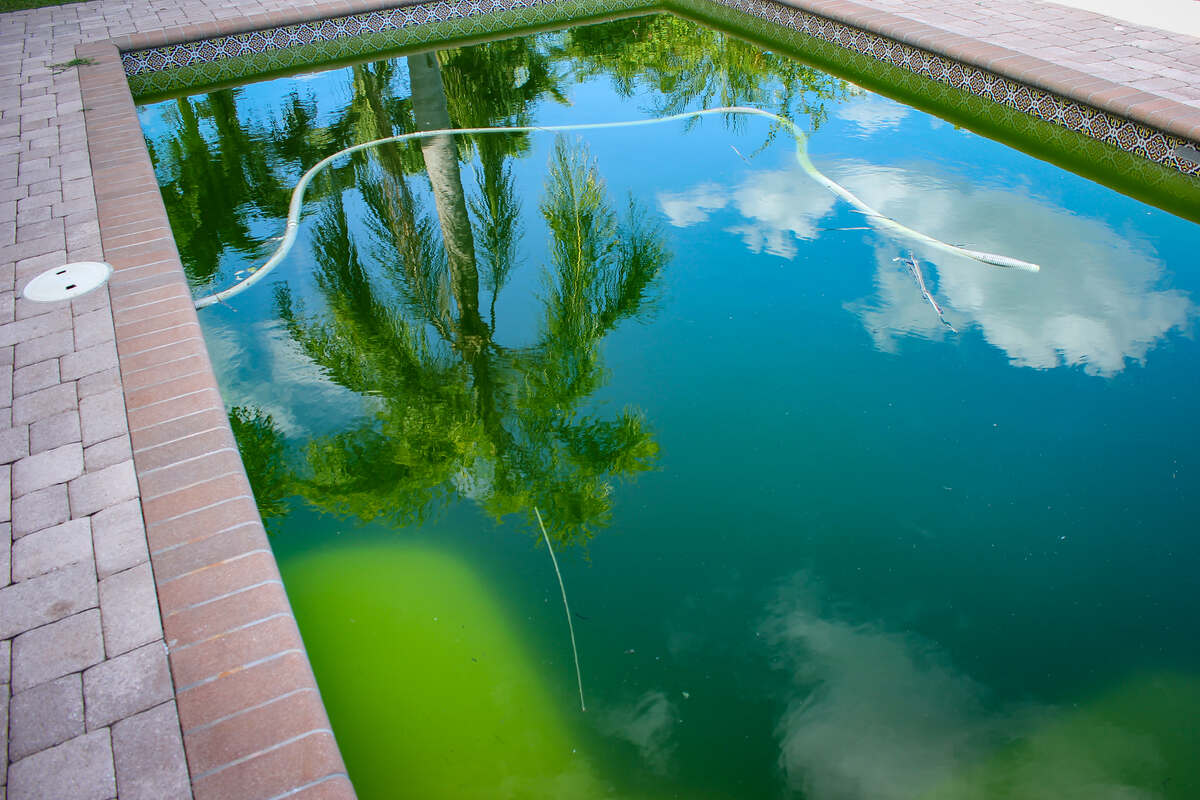
So your crystal-clear pool has turned into a murky green mess seemingly overnight. The good news is that identifying the cause is usually straightforward and easy to fix.
Pool water turns green primarily from algae, which grows when chlorine levels are low, when water is stagnant from lack of circulation, from high concentrations of metals, or from heavy rain.
This guide will help you quickly figure out what’s causing your green pool so you can take the right action. Once you know the culprit, we’ll explain how to get your pool sparkling blue again.
Algae Growth

If your pool water is green and cloudy, it’s almost always from algae. Algae grows in pools primarily due to three main reasons: poor water circulation that creates stagnant areas, rain that disrupts the chemical balance, and hot weather that accelerates the algae’s growth.
How to treat algae in your pool:
- Brush the pool walls and floor to remove algae so the filter can nab it.
- Shock your pool, this is best done late in the day, and run the pump overnight.
- Add algae killer or algacide to your pool, following the manufacturer’s instructions.
- Hire a pro for severely green pools to speed up the process or when you can’t seem to find the right balance.
My tip: Here in West Texas, our summer heat can cause an algae bloom really quickly. The evaporation reduces chemical strengths, and the heat makes algae very happy. During July and August, I check my pool chemical every other day instead of weekly to catch problems early.
Chemical Imbalance
Green water can result from your pool chemicals being out of whack, even with regular maintenance. This usually happens when: the pH level is too high, there’s too much stabilizer in the water, or there are too many phosphates floating around.
How to treat pool chemical imbalance:
- Balance alkalinity first with sodium bicarbonate or muriatic acid, depending on whether it’s high or low. Most often, it’s low in green pools, so check out our guide on “How to Raise the Alkaline Level in a Pool” for more information.
- Adjust pH levels using a pH increaser or decreaser as needed. If your pH is consistently high, check out our specialized guide “How to Lower Your Pool’s pH.”
- Add stabilizer if cyanuric acid (CYA) levels are too low, or partially drain and refill the pool if too high.
My tip: In my experience, get the alkalinity in line first, or you’ll be chasing the perfect pH for days. Alkalinity acts like a buffer, and if it’s off, your pH will keep bouncing around no matter what else you add.
During treatment, run the filter system continuously for 24 hours, then retest and adjust as needed.
Metal in Water

Metals can get into your pool water in two main ways: from well water or rusty pool equipment. When there’s too much metal (like copper or iron) in the water, your pool can turn green. You’ll see this problem more often if you have hard water, when too much metal-based algaecide is used, or if you fill your pool with well water.
How to treat metal contamination:
- Add a metal sequester, a metal binding pool product, to bond metals in the water together to make them large enough to get picked up by the filter.
- Use a metal-removing filter if this is a common problem for you or if your source water comes from a well.
- Replace rusted or corroding metal pool fixtures like ladders or handrails.
My tip: If your saltwater pool is green, metal contamination is a common culprit, often coming from the salt cell plates. See our article on “How to Maintain a Saltwater Pool” for specific guidance.
FAQs About Green Pool Water
If your pool is still green after shocking it, the water may not be circulating well, you might have a high pH level, or perhaps you didn’t use enough shock.
Rain can affect your pool in several ways. When rainwater enters your pool, it dilutes the chlorine concentration, making it less effective. Rain also introduces organic debris that feeds algae growth. Additionally, rainwater typically has a high pH level, which disrupts your chemical balance.
Like regular pools, saltwater pools can turn green for similar reasons. However, first check your salt cell. It might be dirty or not produce enough chlorine. Another frequent issue in salt systems is metal contamination from worn cell plates.
From Green Monster to Blue Paradise
A green pool might look scary, but it’s usually one of three culprits: algae (the most common troublemaker), chemical imbalances (when your pool chemistry goes haywire), or metals (the sneaky cause that’s harder to spot). The key is testing your water first to identify which villain you’re dealing with, then following the right treatment plan.
Most green pools can be back to sparkling blue within a few days, sometimes even overnight, for minor issues. Remember, prevention beats cure every time, so regular testing and maintenance will keep you swimming instead of troubleshooting.
Related Reading
For more information on caring for your pool, check out the following guides:
- How to Open a Pool
- How to Raise the pH in a Pool
- How to Clean Different Pool Filters
- How Often to Clean Your Pool Filter
Main Image Credit: art_rich / Adobe Stock
Related Posts: