To get water off your pool cover, you can use a submersible cover pump to quickly drain the water or use a garden hose to create a siphon for a pump-free method.
The best option depends on your pool type, the amount of water, and the tools you have available.
How to Pump Water Off Your Pool Cover

| Project Difficulty: Beginner Estimated Time: 15 minutes to 1 hour Project Cost: $0 to $150 |
Supplies Needed
Here is what you will need for the project:
- Submersible pool cover pump (manual or automatic)
- Garden hose
- Shop vac (optional for siphoning)
- GFCI-protected outlet
- Pool skimmer net or leaf blower
The easiest way is with a submersible cover pump. According to Reuben Wilt, Owner Operator at Pool Screen Repair Tampa Bay, “The most efficient way to drain water from a pool cover is with a submersible cover pump. A pump with an automatic shut-off feature is an ideal one, since it detects water levels and switches itself on or off.”
These come in two types: manual, which you start and stop, or automatic, which runs independently. The automatic is convenient, but the manual pump gives you more control and is easier on the wallet.
Step 1. Clear Debris from the Cover
Before you start pumping, you need to remove any leaves or other debris from the cover. If they’re dry, use a leaf blower and a pool skimmer net, or a soft brush if they’re wet. This keeps your pump from clogging up and leaking stuff into your pool.
Read more: How to Get Leaves Off Your Pool Cover
Step 2. Set Up the Pump
Attach a standard garden hose to the pump’s outlet. Run the other end of the hose to a spot where the water can drain away from your pool and your house foundation.
Gently set the pump in the deepest part of the puddle on the cover. A long-handled broom can help you push it into place if you cannot reach the center.
Step 3. Run the Pump
Plug the pump into a GFCI-protected outlet for safety. An automatic pump will turn on and off by itself as it detects water. If you are using a manual pump, you must watch it and unplug it as soon as it starts sucking air. If you let a manual pump run dry, it can burn out the motor.
How to Get Water Off a Pool Cover Without a Pump

| Project Difficulty: Beginner Estimated Time: 30 minutes to 2 hours Project Cost: $0 to $20 |
Supplies Needed
Here is what you will need for the project:
- Pool skimmer net or leaf blower
- Garden hose
- Shop vac (optional)
If you do not have a pump, you can still drain off water on your pool cover using a garden hose. Jeremy Yamaguchi, CEO at Cabana, says, “Probably the most efficient method for this would be to use some kind of siphon, whether it’s a manual siphon or a shop vac. This allows you to quickly suck up the water from the pool cover.”
The trick here is that the end of the hose you’re using to drain water has to be lower than the other end, which is in the puddle on the cover. This height difference is what creates the suction to make it work.
Method 1: The Spigot Fill
Put one end of the hose into the puddle on your cover. Hook the other end to a spigot and turn the water on to fill the hose. When the water starts coming out of the top end, turn off the spigot, quickly unscrew the bottom of the hose, and let it hit the ground. The water will start siphoning out.
Method 2: Full Submersion
This one works better if you have a shorter hose. Coil up your hose and push it under the water until all the bubbles are gone. Seal one end with your thumb, pull that end over the side of the pool, and let it fall to the ground. Once you let go of your thumb, the siphon will start up.
Method 3: Use a Shop Vac
Want to get it started even faster? You can use a shop vacuum to jumpstart the siphon. First, take the paper filter out of your vacuum. Now, stick one end of your hose into the water on your cover.
Take your shop vacuum hose and cover the top of your other hose. Flip on your vacuum and it’ll slurp water through in just seconds. Once it’s flowing, turn off your vacuum, and the siphon will carry on.
FAQs About Removing Leaves From a Pool Cover
No. The weight of the water can stretch and damage the cover. Wilt explains, “Leaving water to sit adds weight that can rip or stretch the cover, strain the pool edges, or pull dirty water into the pool.”
For above-ground pools, the weight can even put pressure on the pool’s frame and walls. You should also “watch for mold or bacteria growth,” says Yamaguchi. “The moisture from standing water can be a perfect breeding ground for those things.”
You should remove the leaves and other debris before you remove the water. This prevents your pump from clogging and makes the job cleaner.
Make sure your cover is nice and tight. That way, water can’t collect under the cover. It’s also a good idea to use a pump that automatically kicks in when it detects water.
Yamaguchi says, “It’s a good idea to check daily during periods of heavy rain or snowfall, and during dry periods, check every few days. The sooner you can eliminate standing water, the better.”
When to Call a Pro
If your cover is already sagging significantly or has been damaged by the weight of water and debris, it might be best to call a pro. A pro can assess the damage to your cover and pool and handle the water removal safely.
Home Gnome delivers the best home service experience at the click of a button. Book reliable, skilled services in seconds and leave the rest to us.
Read More:
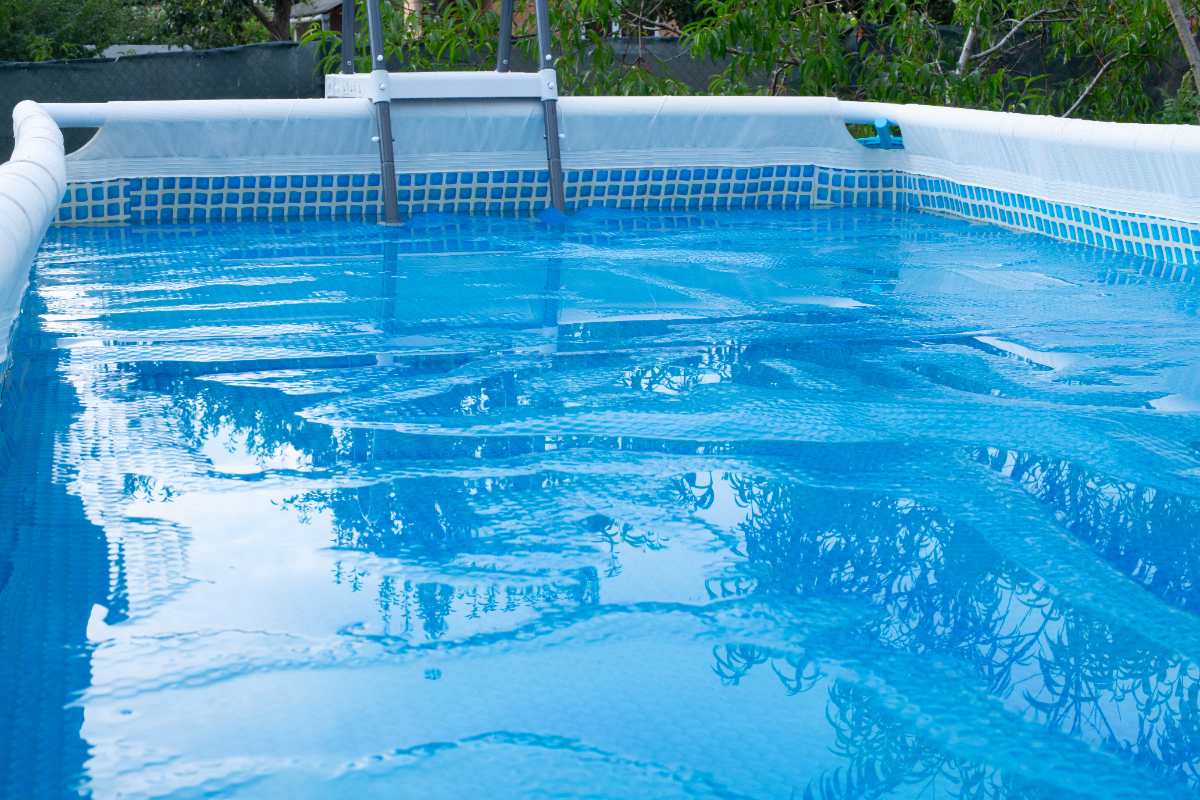
Main Image: Pool water has collected on top of a blue bubble solar cover inside an above-ground pool. Photo Credit: Viktoriia Syvak / Adobe Stock
Related Posts: