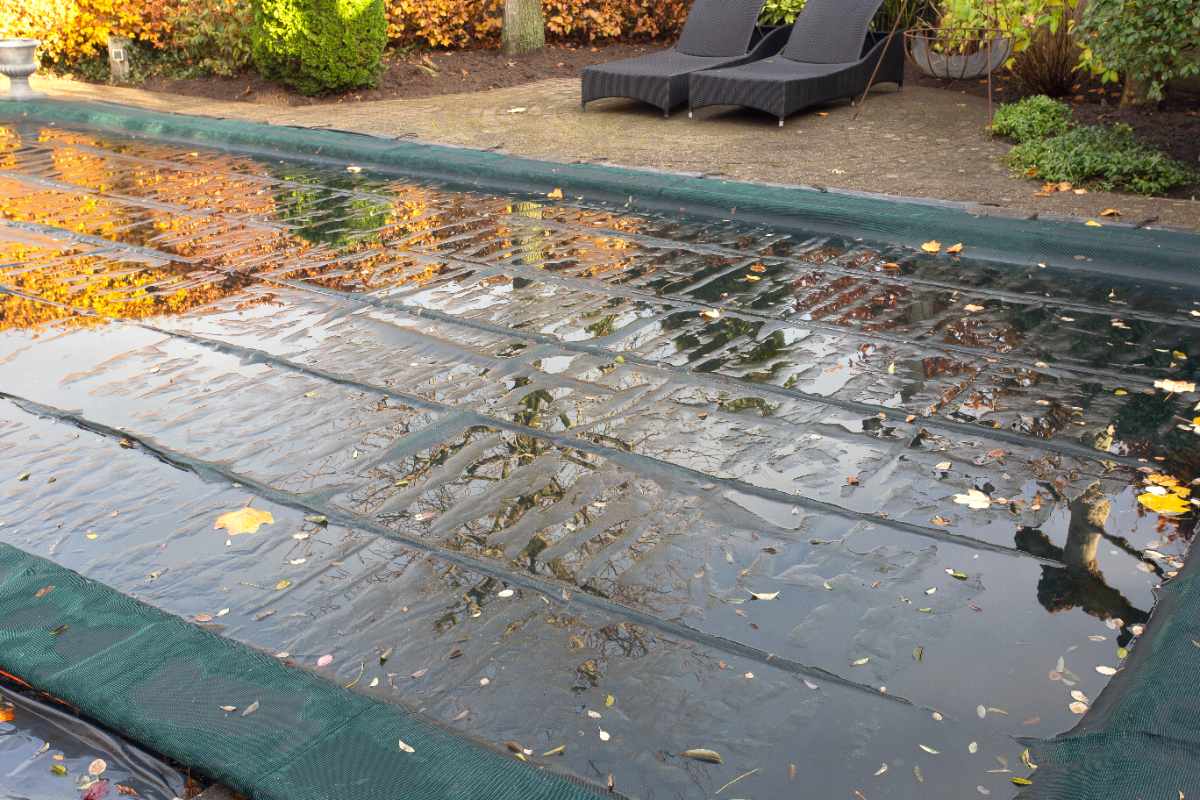
To get leaves off your pool cover, you should start by clearing the standing water with a submersible pump, or if you don’t have one, create a siphon with a garden hose.
After you’ve drained off the water, you can use a leaf blower to clear away dry leaves. For wet leaves, you will need to use a pool brush or a special cover rake to gather them into piles before scooping them off the cover.
| Project Difficulty: Easy Estimated Time: 30 minutes to 2 hours Project Cost: $0 to $150 |
Supplies Needed
Before you start, it’s best to have all your supplies ready:
- Submersible pool cover pump
- Garden hose
- Leaf blower (for dry leaves)
- Pool leaf rake (deep skimmer net)
- Pool cover rake or soft-bristle pool brush
- Large bucket or mesh bag for disposal
Step 1: Remove Water From the Pool Cover

To begin, it’s important to clear off wet leaves, especially from solid pool covers, as they’re heavy and stick to the surface. If you have a mesh or safety cover designed to let water through, you can probably skip this step.
Before you start, use a leaf rake to skim as much of the floating debris out of the water as you can. This will prevent your pump from getting clogged.
Reuben Wilt, owner operator at Pool Screen Repair Tampa Bay, says: “In case you have a solid cover that collects water, use a cover pump first, so you are not lifting the soggy leaves in standing water.”
There are two main ways to get the water off:
- Use a cover pump
- Siphon the water
Read more: How to Get Water Off Your Pool Cover
Step 2. Clear Away Dry Leaves

The job is much easier if the leaves on your cover are completely dry. According to Jeremy Yamaguchi, CEO at Cabana pool service, “Using a leaf blower is often one of the safest and easiest ways. You don’t have to worry about ripping holes in the cover, and you can just stand on the side of the pool.”
Ryan Farley, co-founder of LawnStarter, which offers leaf removal services, agrees, “When you’re working with dry leaves accumulating on your pool cover, I tend to recommend just sweeping them off using any kind of large dry broom. You can also use a leaf blower.”
If you have a taut safety cover that is level with the deck, you can also use a soft pool brush or broom to sweep the leaves right off the edge.
Step 3. Remove Wet and Heavy Leaves
Wet leaves are heavier and require more work, and a leaf blower will not be effective. Yamaguchi warns, “One of the biggest mistakes is simply using the wrong tool. You shouldn’t just use your yard rake, for example, otherwise you run the risk of damaging the pool cover. Use a tool specifically designed for your pool cover.”
Wilt adds that another common mistake is “dragging heavy, wet piles of leaves across the pool cover. The friction can cause rips, or if it is a mesh, the material can wear down, especially if grit and twigs are mixed in.”
Start by using a pool leaf rake to scoop up the largest piles of leaves. Then, use a pool brush or a special pool cover rake to gently pull the remaining leaves into one or two large piles near the edge of the pool. If your cover is a solid type that sags into the pool, you may need to scoop the final pile out by hand.
Finally, scoop the heavy, wet piles into a bucket with holes or a mesh bag. This allows the excess water to drain out before you dispose of the leaves.
FAQ About Removing Leaves From a Pool Cover
According to Wilt, “letting leaves sit for weeks… not only holds water but also provides a perfect environment for mold and mildew to grow, thus shortening the cover’s life.”
Yamaguchi explains that it “can lead to long-term damage. It can result in problems like bacteria and mold growth, for example, which can negatively impact the integrity of the cover and lead to you needing to buy a replacement sooner.”
The decaying leaves also create a dirty sludge that can spill into your pool, and if that happens, you’ll need to learn How to Get Leaves Out of Your Pool to prevent algae and chemical imbalances.
You can use a leaf net. It’s a lightweight mesh that sits on top of your winter cover. The net traps leaves but lets rainwater through. When it’s packed, all you have to do is lift it up and everything comes with it.
Make sure to get rid of the water first before you even think about the leaves. The reason is that wet leaves are a whole lot heavier, and they tend to stick to the cover. This makes them really tricky to get rid of with a blower or brush.
When leaves are falling heavily in the fall, you want to clear your pool cover at least once a week, or more often if there have been windy days. For the rest of the winter, just check the cover every few weeks to ensure there’s not too much water and debris piled up.
When to Call a Pro
It’s smart to keep your pool cover free of leaves and debris, especially since it’s better for your cover and makes opening your pool come spring a much easier job.
If you find the task too much of a handful or just don’t have the time, we can connect you with experienced local pros who can handle all of your pool’s upkeep, leaving you free to enjoy your time swimming rather than scooping leaves and cleaning filters.
Home Gnome delivers the best home service experience at the click of a button. Book reliable, skilled services in seconds and leave the rest to us.
Read More:
- How to Get Water Off Your Pool Cover
- How to Install a Pool Cover on Your In-Ground Pool
- How to Cover an Above-Ground Pool
- How to Keep Leaves Out of Your Pool
Main Image: A mesh pool cover with water and leaves on its surface. Photo Credit: annebel146 / Adobe Stock
Related Posts: