

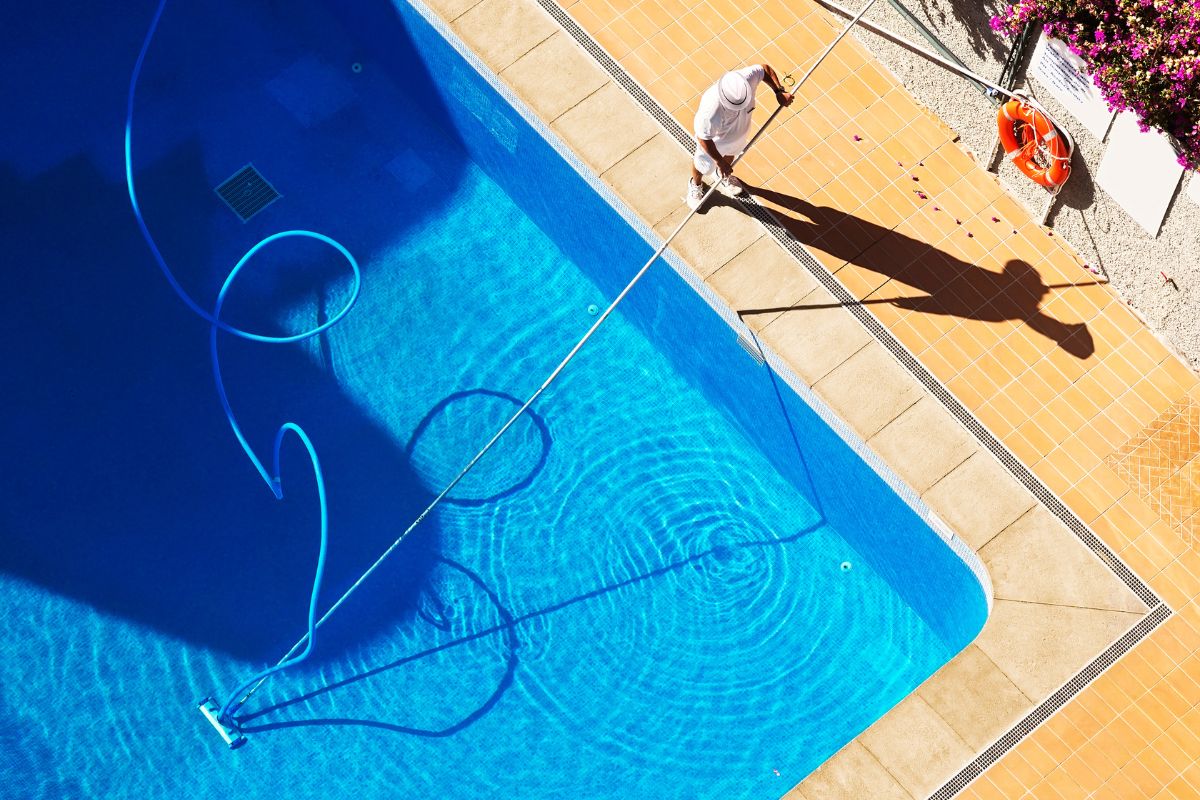
Manual pool cleaners put you in control of your pool’s cleanliness. Unlike many robot pool cleaners, which scour the pool autonomously, a manual cleaner lets you tackle dirt where it actually builds up — like steps, corners, and shallow ledges that robots can miss.
But manual cleaners come in different forms – standard vacuum heads, pump-assisted cleaners, and battery-powered vacuums, to name a few. We’ll explain each one to help you pick the perfect tool for your pool care routine.
Standard Vacuum Head

This is your no-frills option. It’s a brush head that connects to a pole and uses your pool’s skimmer system. You attach it to a long pole and connect a hose from the vacuum head to your skimmer. When the pump is running, it sucks dirt and debris through the vacuum and into your pool’s filter.
Start vacuuming near your skimmer and work outward in overlapping strokes. This pushes debris toward the main suction point.
| Pro Tip: “Always fill the vacuum hose with water before connecting it to your skimmer,” says Nick Preston, owner of Best Coast Pools in Florida. “Otherwise, air enters your pump line and wrecks your suction.” |
For step-by-step instructions on the vacuuming process, see our guide on “How to Vacuum a Pool.”
Best for:
- First-time pool owners learning the ropes
- Small to medium-sized pools (under 20,000 gallons)
- Homeowners on tight budgets
Key advantages: Most affordable option (average range $25 to $75), easy to use, lightweight and maneuverable, works with standard pool equipment.
Main drawbacks: Basic cleaning power; only works as well as your pool pump does, and brushes need regular replacement.
Maintenance needs (low): Rinse after each use, replace brush heads every 6-12 months, check hose connections for leaks. Store in shade to prevent UV damage to plastic parts.
For saltwater pools, rinse thoroughly with fresh water after each use to prevent salt buildup and corrosion. Check out our guide on “How to Maintain a Saltwater Pool” for complete maintenance tips.
Pump-Assisted Manual Cleaners

Pump-powered cleaners connect to your pool’s pump system. They have weights to help them stay down and flexible joints that help stop the hose from getting tangled. These cleaners have stronger suction than the basic models and remove more dirt and algae than the basic models.
| My tip: For stubborn algae spots, let the vacuum head sit directly on the affected area for 10-15 seconds. The concentrated suction works better than repeated passes. |
Best for:
- Medium to large pools (over 15,000 gallons)
- Pools dealing with heavy dirt and debris
- In-ground pools with strong pump systems
Key advantages: Powerful suction, complete debris removal, sturdy construction, and good cleaning performance.
Main drawbacks: Higher initial cost ($70-$200 average cost), needs a strong pump system, and is heavier than basic models.
Maintenance needs: Rinse after each use, check hose connections monthly, replace filter bags or brushes every 3 to 6 months, and inspect swivel connections for wear at least once a year.
Battery-Powered Manual Vacuums

These modern options run on rechargeable batteries and have built-in collection systems. They have independent motors for suction, so you don’t have to connect them to your pump. With an average 45 to 90 minute battery life, they offer portable and convenient pool cleaning.
It’s advisable to keep a spare charged battery on hand. Modern technology has its perks, but running out of power halfway through a pre-party cleanup sucks.
Best for:
- Above-ground pools or spas
- Quick spot cleaning and maintenance
- Pools with weak or no pump systems
Key advantages: Complete portability, no hose management, works independently of pool system, instant setup and use.
Main drawbacks: Limited battery life, higher purchase price ($150-$400 average cost), smaller debris capacity than pump-powered models. Also, battery life depends a lot on temperature and battery condition, so real-world runtime can vary.
Maintenance needs (Medium): Charge battery after each use, empty debris bag during cleaning, rinse unit after each use, clean filters weekly. Replace the battery every 2-3 years and the filters every 6 months.
| Pro Tip: “Battery vacs are perfect for spot cleaning, but during heavy debris weeks, check and empty the chamber often to keep suction strong,” Preston advises. |
How to Pick the Best Pool Vacuum For You
Selecting a pool cleaner starts with understanding your specific needs. Consider your pool size, liner material, and cleaning commitment to find the perfect match.
| My tip: Test your pool’s suction strength by placing your hand over a skimmer with the pump running. If it doesn’t create strong suction, you’ll either need a booster or stick with battery-powered options. |
Pool size: Basic vacuum heads work great for small pools under 15,000 gallons with modest suction power. Larger pools over 15,000 gallons need stronger suction to cover more ground efficiently without wearing you out.

Liner material: Basic and pump-powered vacuum heads come with specific brush types for different pool surfaces. Vinyl pools need soft nylon brushes to prevent liner tears, while fiberglass requires medium-stiffness nylon to avoid scratches. Concrete pools can handle steel or stiff nylon brushes for tough cleaning.
Battery-powered cleaners usually have universal brushes that work on most surfaces, but double-check compatibility with vinyl liners.
Cleaning schedule: Battery-powered models are ideal for quick daily touchups and hot tubs/above-ground pools, but may struggle in larger pools. Basic vacuum heads work for most pools and are great for tough algae spots, though they require more effort. Pump power is ideal for weekly deep cleaning and busy pools.
| Pro Tip: Says Preston: “With vinyl pools, always go soft-bristle. Stiff brushes can wear down seams or tear thin spots, especially on older liners.” |
Even if your pool doesn’t have a pump you can still use a manual vacuum. Check out this video to learn how:
FAQ: Manual Pool Cleaners
Vacuum once a week during swimming season for regular maintenance. Vacuum more frequently after storms to prevent stains and clogs, and after pool parties as well. One advantage of manual cleaning is that you can address issues immediately when you spot them.
Most manual cleaners work with any pool, but choose wisely. Above-ground pools benefit from battery-powered models due to easier maneuvering. In-ground pools typically need pump-powered systems for adequate suction. Always match brush type to your pool surface to prevent damage.
Yes, a manual pool vacuum works great for your saltwater pool. However, always rinse the equipment thoroughly with clean water after each use to prevent corrosion. Look for models with stainless steel components if you have a saltwater system.
Water You Waiting For?
Handheld pool vacuums and other manual pool cleaners offer a cost-effective solution for pool care while giving you full control over the cleaning process. A basic vacuum head works well for beginners and smaller pools, while pump-powered models suit larger pools, and battery-operated ones excel where portability matters most.
By using the right pool vacuum for your pool with the proper chemical balance and regular maintenance, you’ll have the crystal-clear oasis of your dreams. But if you need a hand with your pool care routine, Home Gnome delivers the best home service experience at the click of a button. Book reliable, skilled pool care services and leave the rest to us.
Home Gnome delivers the best home service experience at the click of a button. Book reliable, skilled services in seconds and leave the rest to us.
Read More
Continue your pool care journey with the following guides:
Main Photo Credit: GDM photo and video / Adobe Stock
Related Posts:



Editorial Contributors
-
Raven Wisdom
Author
Raven Wisdom is an experienced DIY enthusiast and writer based in West Texas. Her areas of focus include home remodeling and upgrades, outdoor projects, gardening, and sustainable living. Self-described as half-feral, but mostly harmless, Raven is also a devoted mother of two children in an Autism family, and an active supporter of local humanitarian efforts and animal rescues.
Learn more -

Nick Preston
Reviewer
Nick Preston is the owner of Best Coast Pools and a guy who believes great businesses are built on great systems — and even better relationships. He’s been in the trenches of service, operations, and growth and now his passion is helping other pros build businesses — and lives — that they’re proud of.
Learn more
