To winterize your hot tub, you first need to inspect it and turn off the power. Then you will flush the plumbing, drain all the water, and clear the lines and equipment. Finally, you clean the shell and filters, add antifreeze as a safeguard, and secure the winter cover.
- Supplies Needed
- Step 1. Pre-Winterization Inspection
- Step 2. Flush the Plumbing
- Step 3. Clear the Air Blower and Turn Off the Power
- Step 4. Drain the Hot Tub
- Step 5. Open Equipment Drains
- Step 6: Blow Out the Lines
- Step 7: Clean and Store the Filters
- Step 8: Add Antifreeze (Optional)
- Step 9: Clean the Shell
- Step 10: Secure the Cover
- FAQ About Winterizing Your Hot Tub
| Project Difficulty: Beginner Estimated Time: 4 to 6 hours Project Cost: $40–$120 |
Supplies Needed
- Garden hose
- Submersible pump
- Wet/dry vacuum
- Towels or sponges
- Plumbing line flush product
- Filter cleaner
- Spa shell cleaner
- Hot tub cover
- Non-toxic RV antifreeze
- Water testing kit
- Basic hand tools
- Funnel (for antifreeze)
- Protective gear (gloves, safety goggles)
A note on safety and water disposal:
Before winterizing your hot tub, stop adding chemicals to it for a few days to let them dissipate. Before draining your hot tub, use a water testing kit to ensure chlorine or bromine levels are near zero for environmental safety.
Many cities prohibit any discharge to storm drains. They often require draining to the sanitary sewer. If a sewer isn’t possible, drain the dechlorinated water with a neutral pH onto a grassy area instead.
Step 1. Pre-Winterization Inspection
The first step is inspecting your hot tub. Look for cracks or leaks in the shell and check the cover for any tears or damage. Run the jets and pumps to make sure everything works correctly.
If you have had heating issues, test the heater element’s integrity before shutting the system down.
Step 2. Flush the Plumbing
Before you drain the water, add a plumbing flush product. Run the jets for the time recommended on the bottle to clean out biofilm and oils from the pipes.
Step 3. Clear the Air Blower and Turn Off the Power
The tub might look empty, but water remains in the equipment. If your spa has an air blower, run it up to 1 minute to push water out of the air channels. Use your wet/dry vacuum’s blower to force air through the lines. This pushes trapped water into the shell, where you can vacuum it up. Go to your main electrical panel and switch off the circuit breaker for the hot tub.
This is your last chance to back out before committing to the shutdown. If you’re considering leaving mid-January soak, you’ll need a different plan on how to maintain your hot tub in winter, including weekly inspections and constant water circualtion.
Step 4. Drain the Hot Tub

Use a submersible pump or a garden hose to drain the hot tub. Once the water is out, use a wet/dry vacuum to get the rest out of the footwell and seats. Jeremy Yamaguchi, CEO of Cabana, explains why a full drain is necessary:
“Unlike pools, which you shouldn’t drain fully in the winter, you typically should drain your hot tub. A big reason for this is that hot tubs typically have jets or drains all throughout, to the point where you can’t easily just lower the water level below them. You don’t want water getting into these things because it will expand when frozen and cause potential damage.”
If you want to speed this up, use a submersible pump. Put it in the deepest part of the footwell and run its hose to your drain spot. This will empty the tub in a few minutes.
Step 5. Open Equipment Drains
Open the equipment panel. Find the pumps and heater, and loosen the large connectors to let water drain. Remove the small drain plugs from each pump and keep them in a safe place. Check your owner’s manual if you can’t find these parts, as their location can vary.
Step 6: Blow Out the Lines
Use your wet/dry vacuum on its blow setting. Press the hose against each jet for about 30 seconds to force the water out. Keep doing this for every jet until only mist comes out.
After blowing out the lines, reinstall all the small drain plugs and re-tighten the pump/heater unions.
Step 7: Clean and Store the Filters

Remove the filter cartridges, rinse them with a garden hose, then soak them in a filter cleaning solution. Rinse them again and let them dry completely. Store the clean filters indoors for the winter.
Step 8: Add Antifreeze (Optional)
Antifreeze is an extra safeguard. Pour non-toxic RV antifreeze into the filter housing and footwell drains to protect residual water in low points. This protects the lowest points in the plumbing. You’ll need to flush it out completely in the spring.
Step 9: Clean the Shell
The hot tub is now empty, and the plumbing is protected. According to Yamaguchi, “You want to clean the filters and the entire shell of the hot tub. Clean thoroughly, and make sure everything gets the chance to dry thoroughly.”
Use a soft cloth with a spa surface cleaner to wipe down the entire interior. You should also leave an absorbent towel in the footwell to catch any incidental moisture that sneaks in over winter.
Step 10: Secure the Cover
Do a final check to ensure the cover is in good condition and lock all the corner straps to keep it in place. You should add extra wind straps if you live in a windy area.
For some additional weatherproofing, put a winter cover cap or tarp over the hard cover to shed rain or snow and protect the center seam. After storms, brush snow off with a broom (never a shovel) to prevent any damage.
If trees near the hot tub might drop branches, you can put a thin piece of plywood on top for a short time, strapped down only while the storm is happening. That’s the only thing you can do to secure this more.
FAQ About Winterizing Your Hot Tub
Yes, you must winterize a hot tub if you are shutting it down for the winter in a climate where temperatures fall below freezing. The plumbing can freeze, expand, and crack components if water is left in the plumbing.
You should empty your hot tub if you do not plan to use it during the winter months. Emptying the hot tub is the main part of the winterization process.
Yes, you can, but it is very risky. The best time to winterize a hot tub is before the season’s first freeze. Draining your hot tub when temperatures are already freezing means any water left in the lines can quickly turn to ice, causing the exact damage you are trying to prevent.
If you must winterize in the cold, try to do it on a milder day and work quickly to get every last drop of water out of the plumbing.
Water freezes at 32 degrees. The water inside a hot tub’s pipes is insulated, so it takes a sustained period of freezing temperatures for the pipes to be at risk. The greatest danger occurs during a power outage when circulation stops.
A frozen hot tub requires immediate action. Yamaguchi advises, “Turn off the power and try to thaw the pipes. You can use things like a space heater or even warm towels to try to do this.” Never use an open flame to thaw pipes.
Don’t Get Left in the Cold
When winterizing a hot tub, you must pay attention to the details. If you do it right, you can relax all winter knowing your hot tub is safe and will be ready to go in the spring.
If you would rather be doing anything else with your weekend than fighting with a shop vac, we can help you connect with experienced pros who can shut down your hot tub correctly. It will give you total peace of mind all winter long.
Home Gnome delivers the best home service experience at the click of a button. Book reliable, skilled services in seconds and leave the rest to us.
Read More:
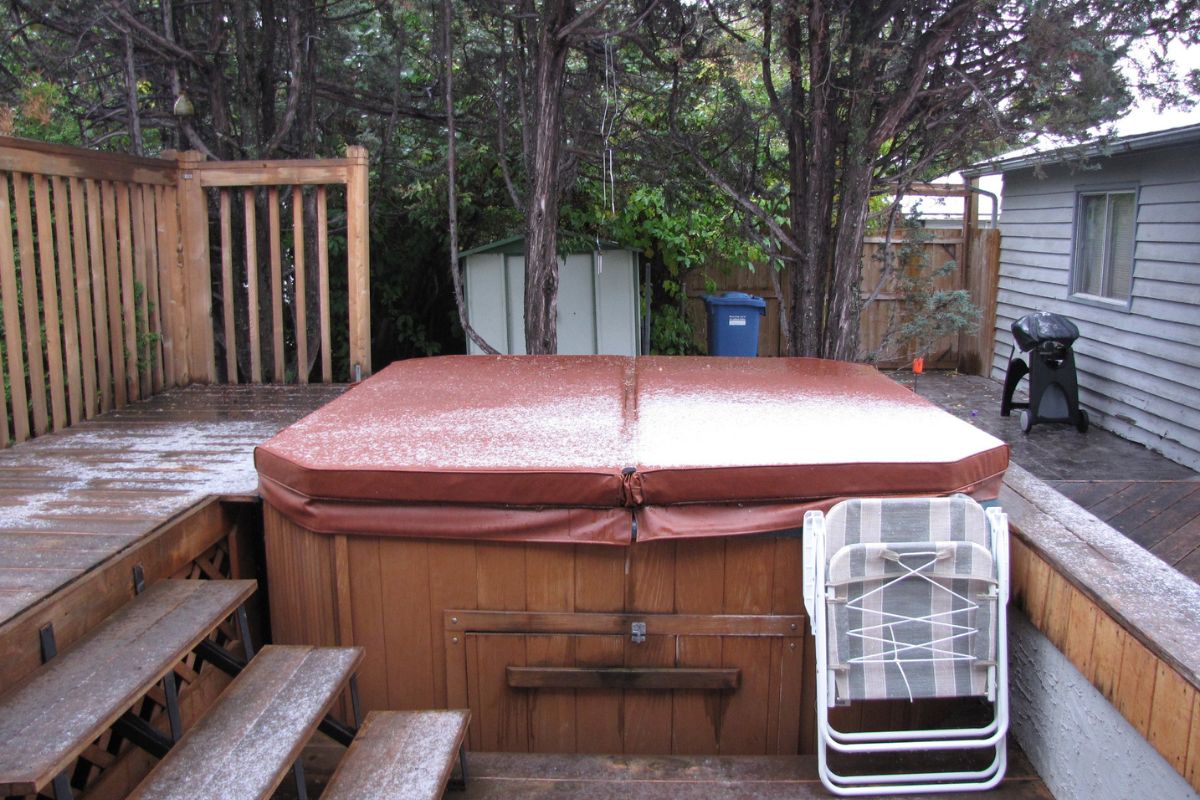
Main Image: A hot tub with a brown cover is lightly covered in snow on a wooden deck. Photo Credit: eileenmak / Flickr / CC BY 2.0
Related Posts: