The main signs of too much chlorine are a sharp chemical smell, physical irritation like red eyes and itchy skin, and even bleached swimsuits or pool liners.
If you notice any of these signs, it’s time to test your pool water. A water test is the only way to know for sure what’s happening, because your senses can lie.
The Chemical Smell
It’s a common myth that a strong “pool smell” means a pool is clean. In fact, that pungent odor is usually caused by chloramines. The chemical byproducts are created when not enough free chlorine is present to fully break down contaminants like sweat and oil.
Jeremy Yamaguchi, CEO of Cabana, notes that “when a pool is over-chlorinated, you can often smell it. If you notice the chlorine smell is a lot stronger than normal, take note of that.”
Faded Swimsuits, Liners, and Surfaces
Have you noticed that swimsuits are fading rapidly or that your vinyl pool liner’s color is lightening? High chlorine levels can bleach fabrics and surfaces, stripping away dyes and weakening materials.
If pool toys, swimsuits, or even the liner and pool cover look washed-out or brittle, it could be due to too much chlorine. Prolonged exposure to chlorine above the recommended range will fade a vinyl liner and can shorten its lifespan. Also, plastic and rubber parts (like goggles or pool floats) may deteriorate faster.
You should also look for signs of corrosion on any metal pool equipment. An over-chlorinated pool can start to corrode stainless steel ladders, railings, and other metal fixtures. Rust or pitting on metal parts, or etching on pool tiles, might appear if chlorine (and possibly low pH) has been too strong for too long.
Cloudy Water

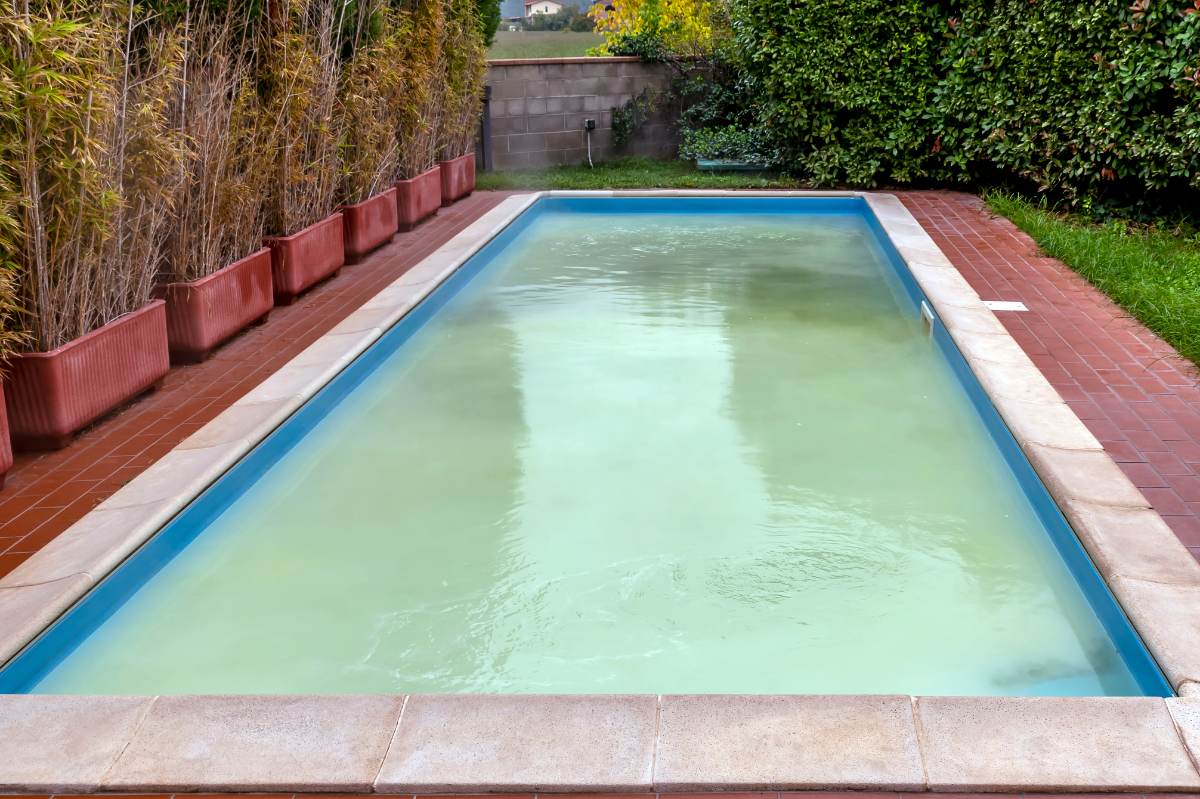
Can too much chlorine make a pool cloudy? It’s not the most common cause of cloudiness (usually that’s due to poor filtration, high pH, or algae die-off), but extremely high chlorine levels can sometimes lead to haze.
For example, if you over-shock the pool, the sudden chemical imbalance might cause a temporarily cloudy pool. High chlorine can also throw other levels (like pH or calcium hardness) off balance, which in turn causes cloudiness.
Discolored Water
In normal situations, green pool water is a sign of algae and low chlorine, not high. However, there is an exception: if your water contains metals (like copper from certain algaecides or source water), adding a lot of chlorine at once can oxidize those metals and give the water a green tint.
While chlorine itself is meant to prevent green algae, an over-chlorinated pool with metals present might look light green or teal. If your pool is green despite high chlorine, you might be dealing with metal oxidation or other imbalances. In any case, unusual color changes after adding chlorine are a sign you should test your water and check the chlorine level.
Skin, Eye, and Respiratory Irritation
The most immediate concern with too much chlorine is the effect it has on people in the water. As highlighted by Yamaguchi, when a pool is over-chlorinated, “your skin/eyes/hair is more likely to get irritated and dry.” Common symptoms include:
- Skin and hair irritation: It can leave skin feeling dry and itchy, and can make hair brittle.
- Eye irritation: Red, stinging, and watery eyes indicate over-chlorination. It can also cause temporary blurry vision.
- Respiratory issues: The air just above the pool’s surface can also be irritating and lead to coughing, wheezing, or a burning sensation in the throat.
While rare from swimming alone, exposure to extremely high chlorine concentrations can cause more severe symptoms like nausea, violent coughing, or difficulty breathing. If you or someone you know experiences these symptoms after swimming or handling pool chemicals, you should seek medical attention immediately.
What to Do If Your Pool Has Too Much Chlorine

Before you trust your senses, test the water. It’s the only step that gives you hard facts. While your nose might pick up a chemical smell, only a quality test kit can tell you precisely what’s going on with your water chemistry.
If you’re unsure how to begin, our guide on How to Test Pool Water explains the process. Once you confirm the levels are too high, follow our complete, step-by-step guide on How to Lower Chlorine Levels in Your Pool.
Get Back to Just Enjoying Your Pool
Figuring out your pool’s chemistry is a constant balancing act. Knowing the signs of too much chlorine is a huge part of keeping your water safe and your equipment in good shape. You can absolutely manage it yourself.
Sometimes, you just want to swim, not spend your weekend staring at test kits and handling chemicals. If you’re ready to hand the job over to someone who does this every day, we can help. We’ll connect you with an experienced local pool pro who can get your water perfectly balanced so you can get back to simply enjoying your pool.
Home Gnome delivers the best home service experience at the click of a button. Book reliable, skilled services in seconds and leave the rest to us.
Read More:
- How to Add Chlorine to Your Pool
- How Often to Add Chlorine to Your Pool
- How to Increase Free Chlorine in Your Pool
- Shock vs. Chlorine: What’s the Difference?
- What Is Chlorine Lock?
Main Image: Cloudy pool water. Image Credit: Marco Taliani / Adobe Stock
Related Posts: