The best time to close your pool for winter is when the water temperature consistently drops below 65°F. This is the most important rule to follow. Getting this timing right helps prevent many problems and makes for a much easier opening in the spring.
The 65-Degree Guideline
A lot of people get into the habit of closing their pool around Labor Day. The better way is to forget the date and use a thermometer. Waiting for the water to cool down before closing your pool is the industry standard for a particular reason.
Closing the pool while the water is still warm creates a perfect environment for algae to grow, even with a cover on. The winter chemicals you add will be used up quickly trying to fight it, leaving you with a green, murky mess when you open the pool next year.
Jeremy Yamaguchi, CEO at Cabana, explains the science behind this rule: “The 65-degree closing rule has a lot to do with algae growth. Algae thrives in warm conditions, and research has shown that it slows down considerably once temperatures drop below 65. So, by waiting until temperatures are at least below 65, you decrease the likelihood of algae growth when closing up your pool for the rest of the year.”
Other Factors to Consider
While the 65-degree rule is your main guide, there are a few other things that can affect your timing:
Your Climate and Location

Where you live changes what “closing a pool” even means. Here is a table with the typical closing windows for different regions of the U.S.:
| Region | Typical Pool Closing Window |
| Northwest | Beginning of September to November |
| Northeast | Early September to early October |
| Midwest | Mid-September to early October |
| Southwest | September to November in high elevations and December or later for low elevations |
| South | Early October in northern areas to December in further south. |
Trees and Falling Leaves
The trees in your yard can force you to close your pool sooner than the temperature might suggest. If deciduous trees surround your pool, a heavy leaf fall can overwhelm your skimmer and filtration system. While you can keep up with cleaning for a while, there is a point where the daily labor of skimming and vacuuming becomes too much.
Leaving a large amount of leaves in the pool over the winter is a bad idea. As they decay, they will stain your pool’s surface. They also create a sludge at the bottom of your pool that can become a breeding ground for an algae bloom in the spring.
In-Ground vs. Above-Ground Pools
The 65-degree rule applies to both in-ground and above-ground pools. The timing doesn’t change, but the risks you’re trying to avoid differ.
With in-ground pools, the biggest worry will be with the underground plumbing. If water freezes in the pipes running to your equipment, it can expand and crack them. Read our guide on How to Winterize Your In-Ground Pool for more in-depth details.
Above-ground pools have a different main enemy: ice. Because they’re more exposed, above-ground pools tend to cool down faster. A solid sheet of ice on the surface can expand and press against the pool walls, possibly damaging the structure or the liner. You can learn the winterization steps in our guide on How to Winterize Your Above-Ground Pool.
FAQ About Closing Your Pool
Yamaguchi explains, “If you close too early, your chances of algae growth are higher. It’s definitely more common for people to discover significant algae problems when they take their pool cover off.”
Yamaguchi says, “If you close too late, there is a greater risk of damage due to water freezing. That damage is typically more significant and costly to fix than damage caused by algae.” He adds, “I’ve seen everything from pipes to pumps, to even the shell of pools themselves crack because of pools being closed too late, causing water to freeze and expand.”
In some warmer climates, you can leave a pool open year-round. It saves you the work of opening and closing, but it comes with its own costs and risks. You’ll need a freeze protection sensor.
Ready for Winter?
Remember that temperature is what matters most. The 65 degrees F rule is your best defense against waking up to a green pool in the spring or costly freeze damage.
If you’d rather not leave it to chance, we can help connect you with experienced pros who can handle the closing process perfectly, giving you peace of mind all winter long.
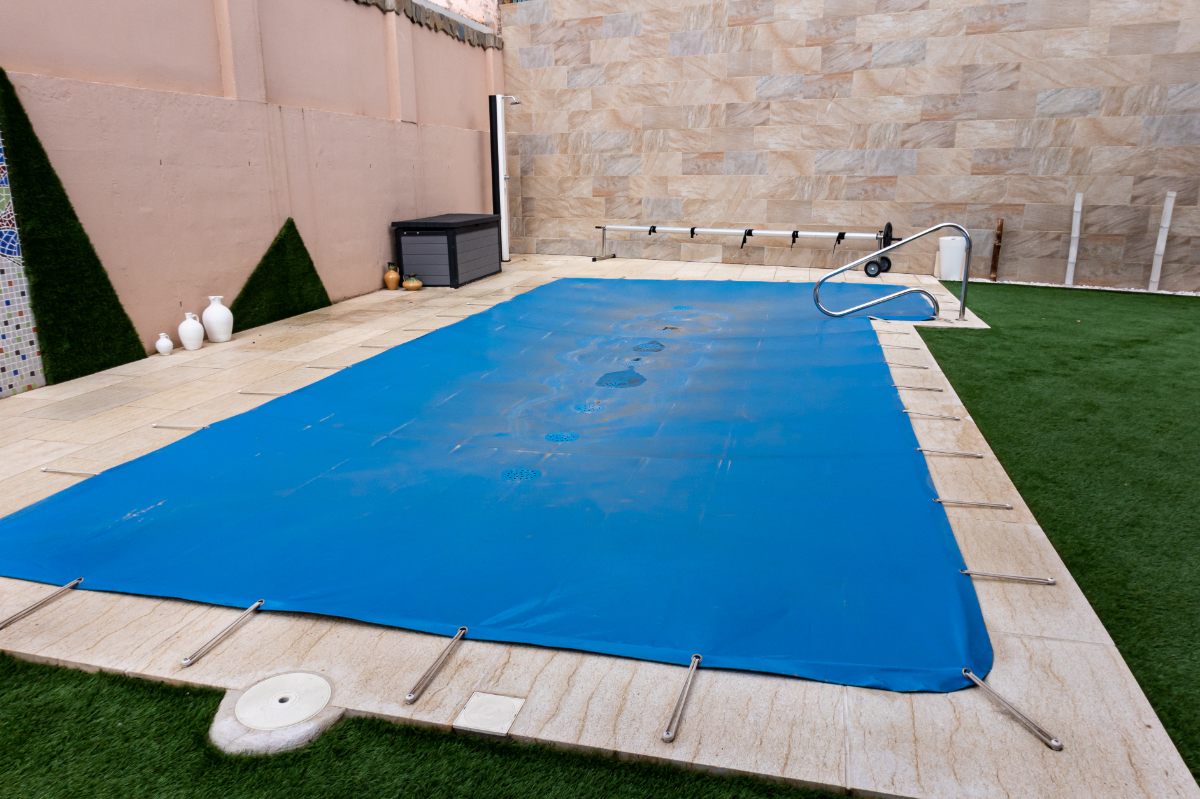
Main Image: Pool covered with a blue tarpaulin. Image Credit: Javier Paredes / Adobe Stock
Related Posts: